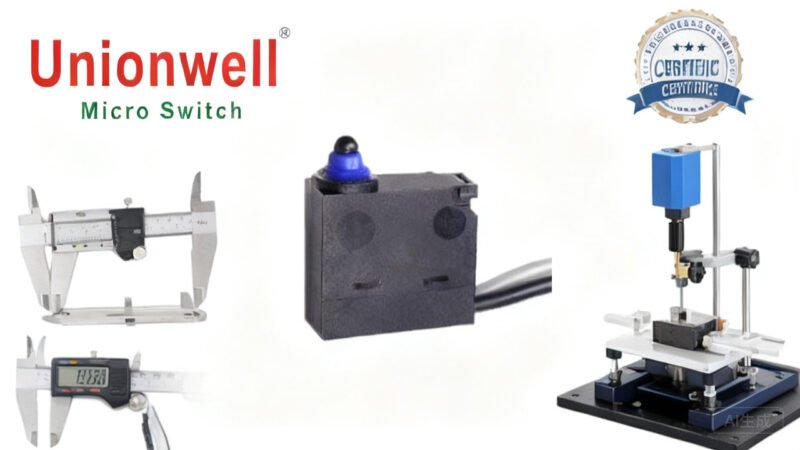
In the intricate landscape of modern industrial automation and electronic design, the seemingly small micro switch plays a disproportionately critical role. These compact, snap-action devices are the unsung heroes behind countless operations, ensuring precision, safety, and efficient functionality across a vast spectrum of B2B applications. For engineers, product developers, and procurement specialists, understanding the nuances of micro switches—including specialized variants like limit switches and waterproof micro switches—and partnering with a reputable micro switch manufacturer is paramount to achieving operational excellence and product longevity.
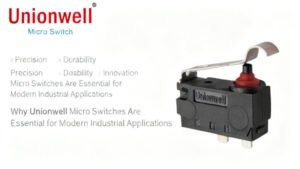
At its heart, a micro switch is a small, highly sensitive snap-action switch designed to detect the presence or absence of an object, or to indicate a specific position. Characterized by their precise actuation point and rapid change in contact state, they offer high repeatability and a long mechanical life. Their internal mechanism typically involves a spring-loaded lever or plunger that, when activated by a minimal force, causes the electrical contacts to switch from one state to another almost instantaneously. This “snap-action” ensures a clean break or make, preventing arcing and extending the switch’s electrical life.
Ubiquitous Applications Across Industries
The versatility of micro switches makes them indispensable in a myriad of sectors:
- Automotive: Used in door latches, seat belt detection, gear shift mechanisms, and power window controls.
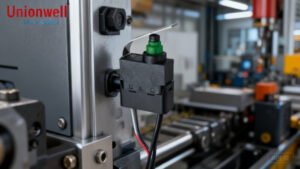
- Industrial Automation: Critical for position sensing, safety interlocks on machinery, conveyor belt monitoring, and process control.
- Home Appliances: Found in microwave ovens (door interlocks), washing machines (lid switches), refrigerators (light switches), and various small kitchen appliances.
- Medical Devices: Ensuring precise control and safety in diagnostic equipment, hospital beds, and infusion pumps.
- HVAC Systems: Monitoring air pressure, water flow, and fan operation.
- Security Systems: Detecting tamper events in enclosures and alarm systems.
The Specialized Role of Limit Switches
A specific and crucial category within the micro switch family is the limit switch. These devices are purpose-built to detect the presence or absence of an object or to monitor the travel limits of moving machinery. They are fundamental components in industrial automation, providing feedback to control systems regarding the position of parts, tools, or equipment. For instance, a limit switch might stop a conveyor belt when an item reaches its end point, prevent a machine arm from exceeding its safe range of motion, or ensure a gate is fully open or closed before an operation proceeds. Their robust construction and precise actuation make them vital for safety, process control, and sequence operations in factories, robotics, and heavy machinery.
Conquering Harsh Environments: The Waterproof Micro Switch
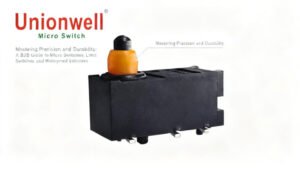
Not all environments are benign. For applications exposed to moisture, dust, oils, or corrosive liquids, a standard micro switch simply won’t suffice. This is where the waterproof micro switch becomes indispensable. Engineered with advanced sealing technologies—such as O-rings, epoxy potting, and hermetically sealed enclosures—these switches are designed to maintain their operational integrity even when submerged or subjected to high-pressure washdowns. Key benefits include:
- Extended Lifespan: Protection against environmental ingress significantly prolongs the switch’s mechanical and electrical life.
- Enhanced Reliability: Reduced risk of intermittent failures or complete breakdowns due to contamination.
- Improved Safety: Prevents short circuits and electrical hazards in wet or dusty conditions.
- Reduced Downtime: Fewer replacements and maintenance interventions, leading to greater operational efficiency.
Common applications for waterproof micro switches include outdoor equipment, marine vessels, food processing machinery, industrial cleaning systems, and any environment requiring an IP (Ingress Protection) rating for dust and water resistance.
Selecting the Right micro switch manufacturer: A Critical Decision
The performance and longevity of your products and systems are heavily dependent on the quality of the components you integrate. Choosing a reliable micro switch manufacturer is not merely a purchasing decision; it’s a strategic partnership. Here are critical factors to consider:
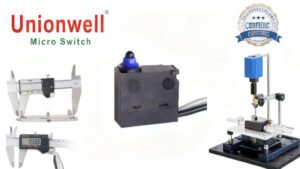
- Quality Control & Testing: A reputable manufacturer employs rigorous testing protocols, including mechanical life testing, electrical load testing, and environmental resilience tests, to ensure consistent product quality.
- Material Science Expertise: The choice of contact materials (e.g., silver alloy, gold plating), housing materials, and sealing compounds directly impacts switch performance and durability.
- Customization Capabilities: The ability to tailor switch specifications—such as operating force, actuator type, terminal options, and mounting configurations—to specific application requirements.
- Compliance & Certifications: Adherence to international standards like UL, cUL, ENEC, CE, and RoHS ensures safety, environmental responsibility, and global market acceptance.
- Technical Support & R&D: A manufacturer with strong engineering support can assist with design challenges and offer innovative solutions. Continuous R&D ensures they remain at the forefront of switch technology.
- Supply Chain Reliability: Consistent availability, efficient logistics, and robust inventory management are crucial for uninterrupted production.
Manufacturers like unionwell, for example, are known for their dedication to precision engineering and stringent quality standards, offering a comprehensive range of micro switches, limit switches, and waterproof solutions tailored for demanding industrial and commercial applications.
Key Technical Considerations for Micro Switch Selection
Beyond the manufacturer, engineers must delve into specific technical parameters:
- Actuator Type: Plunger, lever (straight, roller, simulated roller), pin, or custom options to match the actuation mechanism.
- Contact Configuration: Normally Open (NO), Normally Closed (NC), or Single Pole Double Throw (SPDT) to suit circuit requirements.
- Electrical Ratings: Ensure the switch can safely handle the required voltage and current for both resistive and inductive loads.
- Operating Force: The force required to actuate the switch, critical for sensitivity and application integration.
- Pre-Travel, Overtravel, Differential Travel: These parameters define the mechanical movement characteristics and precision.
- Mechanical & Electrical Life: Specifies the number of cycles the switch can reliably perform under specified conditions.
- Environmental Specifications: Temperature range, humidity, vibration, shock resistance, and crucially, the IP rating for waterproof applications.
Conclusion: Powering Progress with Precision
From the subtle click in a consumer appliance to the critical safety interlock on heavy machinery, micro switches are fundamental to the functionality and reliability of countless B2B products and industrial systems. Whether it’s the robust assurance of a limit switch governing machine movement or the unwavering performance of a waterproof micro switch operating in challenging environments, the choice of component and its manufacturer holds significant weight. By prioritizing quality, understanding application-specific needs, and partnering with a proven expert in micro switch manufacturing, businesses can ensure their systems operate with unparalleled precision, durability, and safety, paving the way for sustained operational excellence and innovation.