In the intricate world of industrial automation and control systems, seemingly small components often hold the key to immense functionality, reliability, and safety. Among these critical elements, micro switches stand out as indispensable workhorses. These compact, precision-engineered devices are the unseen architects behind countless automated processes, ensuring everything from precise positioning to fail-safe operations across diverse industries. For product designers, engineers, and procurement specialists, understanding the nuances of micro switches, including specialized variants like limit switches and waterproof models, is paramount to building robust, efficient, and compliant systems.
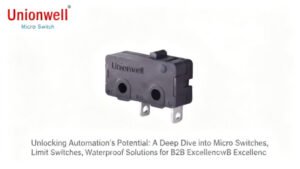
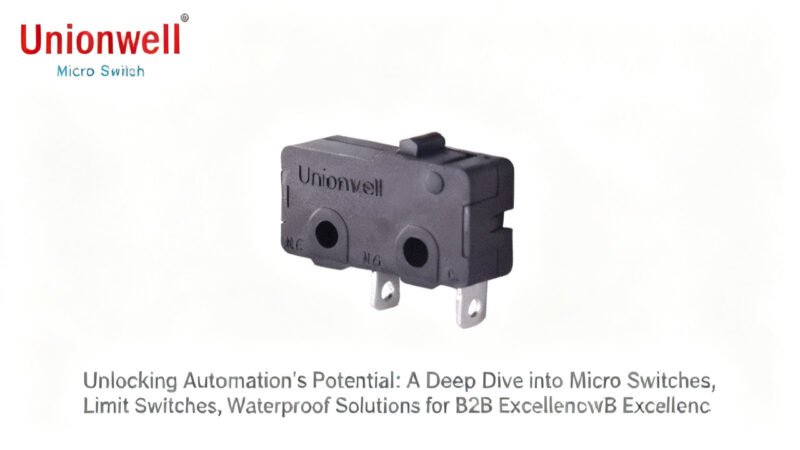
A micro switch, often referred to as a miniature snap-action switch, is characterized by its highly sensitive, rapid-action mechanism. When a small force is applied to its actuator, the internal contacts quickly snap from one position to another, providing a precise and repeatable switching action. This ‘snap-action’ is crucial because it minimizes contact arcing and wear, thereby extending the switch’s operational life and enhancing its reliability. Their compact size, high repeatability, and durability make them ideal for detecting position, presence, or end-of-travel in applications where space is at a premium and accuracy is non-negotiable.
- Precision and Repeatability: Micro switches offer exceptional accuracy in their operating point, making them perfect for applications requiring consistent and precise actuation.
- Durability and Longevity: Designed for millions of cycles, many micro switches are built to withstand demanding industrial environments, ensuring long-term performance.
- Compact Design: Their small footprint allows for integration into tight spaces, facilitating miniaturization in product designs.
- Versatility: Available with various actuator types (plunger, lever, roller, etc.) and electrical ratings, they can be tailored to specific application needs.
Limit Switches: The Sentinels of Industrial Automation
While all limit switches are essentially micro switches, they represent a specialized category engineered for robust industrial applications. A limit switch is primarily used to detect the presence or absence of an object, or to monitor the position of moving parts within a defined range. They serve as critical safety and control devices in heavy machinery, conveyor systems, robotics, and automated assembly lines. When a machine part reaches a predetermined ‘limit,’ the switch is actuated, sending a signal to the control system to stop, start, or reverse a process.
Key features that differentiate industrial limit switches include:
- Rugged Enclosures: Often housed in durable metal or heavy-duty plastic, designed to withstand impacts, vibrations, and harsh industrial contaminants.
- Variety of Actuators: From roller levers for detecting moving cams to wobble sticks for multi-directional sensing, limit switches offer a wide array of actuation methods to suit specific mechanical interfaces.
- High Electrical Ratings: Capable of handling significant current and voltage loads, making them suitable for direct control of motors and solenoids in some applications.
- Environmental Sealing: Many come with high IP (Ingress Protection) ratings, safeguarding against dust, water, and other environmental factors.
The reliability of a limit switch directly impacts the safety and efficiency of industrial machinery, making the choice of a reputable manufacturer like unionwell crucial for ensuring consistent performance.
Conquering Harsh Environments: The Imperative of Waterproof Micro Switches
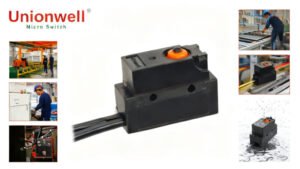
In environments where exposure to liquids, dust, or other contaminants is unavoidable, standard micro switches simply won’t suffice. This is where waterproof micro switches become indispensable. Engineered with advanced sealing techniques and robust materials, these switches provide reliable operation even when submerged or subjected to high-pressure washdowns.
The primary measure of a waterproof micro switch’s effectiveness is its IP (Ingress Protection) rating. For instance, an IP67 rated switch is fully protected against dust ingress and can withstand temporary immersion in water up to 1 meter for 30 minutes. Higher ratings like IP68 offer protection against continuous immersion. These switches are vital for applications in:
- Outdoor Equipment: Agricultural machinery, construction vehicles, vending machines.
- Marine Applications: Boats, docks, underwater equipment.
- Food Processing: Equipment requiring frequent washdowns and sterilization.
- Medical Devices: Sterilizable equipment, patient monitoring systems.
- Industrial Cleaning Equipment: Floor scrubbers, pressure washers.
The robust construction, often utilizing epoxy potting, O-rings, and sealed terminals, ensures that moisture and particulate matter cannot compromise the internal contacts, thereby preventing short circuits, corrosion, and operational failures.
Key Selection Criteria for Industrial Micro Switches
Choosing the right micro switch for a B2B application requires careful consideration of several factors:
- Electrical Rating: Match the switch’s voltage and current capacity to the load it will control. Consider both resistive and inductive loads.
- Operating Force: The force required to actuate the switch is critical for sensitive applications or those involving light objects.
- Actuator Type: Select an actuator (e.g., pin plunger, roller lever, bent lever) that best interfaces with the mechanical system.
- Environmental Conditions: Assess temperature range, humidity, presence of dust, water, chemicals, and vibrations. This will determine the required IP rating and material specifications.
- Mechanical and Electrical Life: Ensure the switch’s specified lifespan (number of cycles) meets or exceeds the application’s demands for durability.
- Contact Configuration: Common configurations include SPDT (Single Pole Double Throw), SPST-NO (Normally Open), and SPST-NC (Normally Closed).
- Mounting Style: Panel mount, PCB mount, or chassis mount options must align with product design.
- Certifications: Verify compliance with relevant industry standards such as UL, CE, RoHS, and others pertinent to the target market.
Partnering with a Trusted micro switch manufacturer
The performance and longevity of your products are directly tied to the quality of their components. When selecting micro switches, limit switches, or waterproof micro switches, partnering with a reputable and experienced manufacturer is non-negotiable. A leading micro switch manufacturer like unionwell not only provides a wide range of high-quality, reliable products but also offers essential technical support, customization capabilities, and rigorous quality control processes. This ensures that the switches you integrate into your designs will perform consistently, meet stringent safety standards, and contribute to the overall success and reputation of your end product.
Conclusion
Micro switches, in their various forms, are far more than just simple on/off devices; they are precision instruments critical to the functionality, safety, and longevity of modern industrial and commercial equipment. Whether it’s the precise position sensing of a standard micro switch, the robust control of an industrial limit switch, or the environmental resilience of a waterproof model, understanding their capabilities and selecting the right component is vital for B2B success. By focusing on quality, appropriate specifications, and aligning with expert manufacturers, businesses can unlock the full potential of their automation systems and build products that excel in performance and reliability.