In the vast and intricate landscape of industrial automation, precision, reliability, and safety are paramount. Every component, no matter how small, plays a pivotal role in ensuring the seamless operation of machinery and systems. Among these critical components, micro switches stand out as unsung heroes, providing the precise control and feedback mechanisms essential for a multitude of industrial applications. For engineers designing the next generation of automated systems and procurement professionals tasked with sourcing the highest quality components, understanding the nuances of micro switches is not just beneficial—it’s imperative.
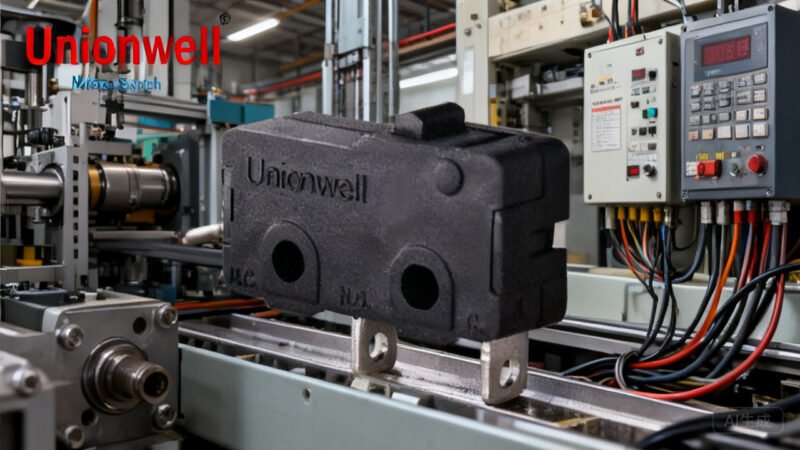
At its heart, a micro switch is a small, snap-action electrical switch characterized by its quick, decisive actuation. It operates on a simple yet highly effective principle: a small movement of the actuator (plunger, lever, or roller) results in a relatively large movement of the electrical contacts, leading to rapid opening or closing of a circuit. This snap-action mechanism is crucial as it minimizes arcing between contacts, thereby extending the switch’s operational life and ensuring consistent performance, even in high-cycle applications. Their compact size, high repeatability, and robust construction make them indispensable across various sectors.
Diverse Applications: The Spectrum of Micro Switches
While the fundamental principle remains consistent, micro switches come in various forms, each tailored for specific operational environments and requirements.
Standard Micro Switches
These are the workhorses of industrial control. Found in everything from safety interlocks on machinery doors to precise position sensing in manufacturing lines, standard micro switches offer reliable on/off control. They are essential for confirming the status of mechanical parts, controlling motor movements, and providing feedback to PLC (Programmable Logic Controller) systems. Their versatility makes them a go-to choice for general industrial equipment, HVAC systems, and even complex medical devices.
Limit Switches: Defining Boundaries with Precision
A specialized category of micro switch, limit switches are designed to detect the presence or absence of an object, or to monitor the extent of an object’s movement. They are critical in automated systems for establishing mechanical limits, hence their name. When a moving part of a machine reaches a predetermined position, it actuates the limit switch, sending a signal to the control system. This signal can initiate an action (like stopping a conveyor belt), prevent an unsafe movement, or trigger a sequence of operations. Limit switches are robust, often housed in durable enclosures, and are fundamental to the safety and operational efficiency of industrial machinery, robotics, and material handling systems.
Waterproof Micro Switches: Conquering Harsh Environments
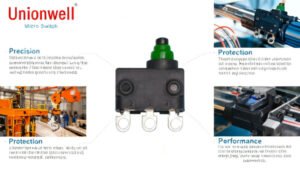
In environments where dust, moisture, oil, or corrosive substances are prevalent, standard switches simply won’t suffice. This is where waterproof micro switches shine. Engineered with advanced sealing technologies, these switches are designed to resist ingress of liquids and particulates, earning them specific Ingress Protection (IP) ratings (e.g., IP67, IP68). Their robust construction ensures reliable operation in challenging conditions such as outdoor equipment, marine applications, automotive systems, food processing plants, and heavy industrial machinery where washdowns are frequent. The integrity of their seal is paramount, protecting the internal contacts from environmental damage and ensuring long-term performance and safety.
Key Considerations for Selecting the Right Micro Switch
Choosing the optimal micro switch requires a meticulous evaluation of several factors to ensure compatibility, longevity, and peak performance in its intended application.
- Electrical Ratings: Understand the voltage, current, and type of load (resistive, inductive, lamp) the switch will handle. Exceeding these ratings can lead to premature failure.
- Operating Force & Actuator Type: The force required to actuate the switch is critical. Actuator types (pin plunger, hinge lever, roller lever, simulated roller lever, etc.) should match the mechanical interface of your application.
- Mechanical & Electrical Life: Evaluate the expected number of operational cycles. High-cycle applications demand switches with superior mechanical and electrical endurance.
- Environmental Protection (IP Rating): For harsh environments, the Ingress Protection (IP) rating is non-negotiable. An IP67 rated switch, for instance, offers protection against dust and temporary immersion in water.
- Operating Temperature Range: Ensure the switch can perform reliably within the ambient temperature fluctuations of its operating environment.
- Contact Material: Different contact materials (e.g., silver alloy, gold plating) are suited for varying load types and current levels, influencing longevity and contact resistance.
- Mounting & Terminals: Consider the physical mounting method (panel mount, PCB mount) and terminal types (solder, quick connect, screw) for ease of integration.
- Certifications: Verify that the switch meets relevant industry standards and certifications (e.g., UL, CE, RoHS) for safety, quality, and compliance.
The Importance of Partnering with a Reputable micro switch manufacturer
The performance and reliability of your automated systems are directly tied to the quality of the components you integrate. When it comes to micro switches, partnering with an experienced and reputable micro switch manufacturer is paramount. A leading manufacturer brings a wealth of engineering expertise, stringent quality control processes, and a commitment to innovation. They offer a diverse product portfolio, including specialized options like high-precision, subminiature, and robust waterproof micro switches, ensuring you can find the exact fit for your unique requirements. Furthermore, a strong manufacturer provides comprehensive technical support, custom design capabilities, and consistent product availability, which are invaluable assets for any B2B operation focused on long-term success and efficiency.
Conclusion
Micro switches, in their various forms – from standard industrial controls to rugged limit and waterproof variants – are foundational elements in the architecture of modern industrial automation. Their compact design belies their critical function in ensuring precision, safety, and efficiency across countless applications. For engineers and procurement specialists, a deep understanding of their types, selection criteria, and the importance of choosing a reliable manufacturer is key to building robust, high-performing systems that stand the test of time and environmental challenges. Investing in quality micro switches is an investment in the reliability and longevity of your entire automated infrastructure.