In the vast and intricate world of industrial automation and control systems, seemingly small components often play the most pivotal roles. Among these, the micro switch stands out as a fundamental electromechanical device, indispensable for precision control, safety interlocks, and reliable operation across countless applications. From factory floors to consumer appliances, these compact yet robust switches are the silent workhorses, ensuring seamless functionality and operator safety. Understanding the nuances of micro switch technology, including specialized variants like limit switches and waterproof micro switches, is crucial for engineers, system designers, and procurement specialists aiming to optimize performance and longevity in demanding environments.
At its core, a micro switch is a snap-action switch, characterized by its rapid and decisive change of state. This snap-action mechanism is achieved through an internal spring system that stores energy as the actuator is depressed, then releases it suddenly to quickly move the contacts from one position to another. This rapid transition minimizes arcing between contacts, significantly extending the switch’s electrical life and ensuring consistent, repeatable performance. Key characteristics that define the utility of a micro switch include:
- High Precision and Repeatability: The snap-action mechanism ensures that the switch actuates at a very precise point and returns to its original state with minimal variation, critical for accurate position sensing.
- Long Mechanical Life: Designed for millions of cycles, micro switches offer exceptional durability in continuous operation.
- Compact Size: Their small footprint allows for integration into tight spaces, making them suitable for miniaturized equipment.
- Versatile Actuation: Available with various actuator types, including pin plungers, lever arms (straight, roller, simulated roller), and panel mount options, to suit diverse mechanical interfaces.
These attributes make micro switches ideal for applications requiring precise detection of position, presence, or limits, providing reliable feedback to control systems.
Limit Switches: The Sentinels of Industrial Automation
A specialized category within the broader micro switch family, limit switches are electromechanical devices designed to detect the presence or absence of an object, or to monitor the travel limits of moving parts within a machine. They are essentially industrial-grade micro switches, often housed in robust enclosures to withstand harsh industrial environments. Their primary function is to provide an electrical signal when a physical object makes contact with the actuator. This signal can then be used to:
- Control Machine Movement: Stopping, starting, or reversing motors based on position.
- Ensure Safety: Activating emergency stops or interlocks when machine parts exceed safe operating limits.
- Count and Sequence: Tracking the passage of items on a conveyor belt or sequencing operations in an automated process.
Limit switches are indispensable in manufacturing, material handling, robotics, and packaging machinery, acting as critical feedback sensors that maintain operational integrity and safety.
Conquering Harsh Environments: The Imperative of Waterproof Micro Switches
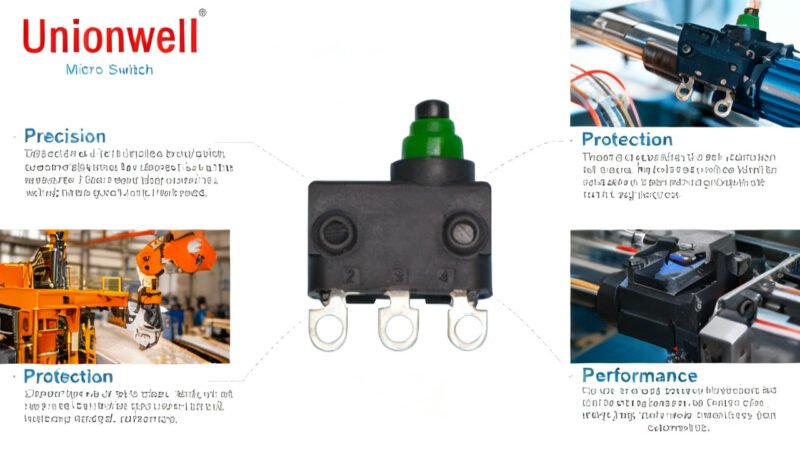
Many industrial and outdoor applications expose electronic components to challenging conditions such as dust, moisture, oil, and corrosive chemicals. In these environments, standard micro switches would quickly fail. This is where waterproof micro switches become indispensable. These specialized switches are engineered with enhanced sealing mechanisms to protect their internal components from ingress of solids and liquids.
- IP Ratings: The level of protection is typically quantified by an Ingress Protection (IP) rating, with IP67 and IP68 being common for waterproof switches. An IP67 rating indicates complete protection against dust (first digit ‘6’) and protection against temporary immersion in water up to 1 meter for 30 minutes (second digit ‘7’). IP68 offers even greater protection against prolonged immersion.
- Applications: Waterproof micro switches are critical in a wide array of demanding sectors, including automotive (door latches, gear shifters), marine equipment (bilge pumps, navigation systems), outdoor power tools, industrial cleaning equipment, food and beverage processing, and outdoor security systems. Their robust construction ensures reliable operation even when exposed to washdowns, heavy rain, or dusty environments, preventing costly downtime and maintenance.
Selecting the Optimal Micro Switch: Key Considerations for Performance and Longevity
Choosing the correct micro switch is a critical decision that impacts the overall reliability, safety, and efficiency of a system. A systematic approach considering several key factors is essential:
- Environmental Factors: Assess the operating environment. This includes temperature range, presence of dust, moisture, oil, or corrosive agents. This will determine if a standard, sealed, or waterproof micro switch (e.g., IP67 rated) is required.
- Electrical Specifications: Match the switch’s electrical ratings (voltage, current, AC/DC, resistive/inductive load) to the application’s requirements. Overloading a switch can lead to premature failure.
- Mechanical Durability: Consider the expected number of operating cycles. Switches are rated for millions of cycles; selecting one with an appropriate mechanical life for the application’s duty cycle is vital. Operating force and pre-travel/over-travel characteristics are also important for mechanical compatibility.
- Actuator Type: The interaction between the switch and the activating mechanism dictates the actuator type. Options include pin plungers for direct actuation, various lever types (straight, roller, simulated roller) for applications requiring more travel or less operating force, and panel mount options.
- Mounting and Termination: Determine the physical mounting method (panel mount, PCB mount, screw mount) and the electrical connection method (solder lugs, quick connect terminals, wire leads).
- Certifications and Standards: Ensure the switch complies with relevant industry standards and certifications such as UL, CE, CQC, and RoHS, particularly for international markets or specific safety requirements.
Careful consideration of these factors ensures the selection of a micro switch that not only performs reliably but also contributes to the longevity and safety of the entire system.
The Role of a Reputable micro switch manufacturer
The performance and reliability of micro switches are directly tied to the quality and expertise of their manufacturer. A reputable micro switch manufacturer plays a pivotal role in providing components that meet stringent industrial demands. They invest significantly in research and development to innovate new designs, improve materials, and enhance manufacturing processes. Key attributes of a leading manufacturer include:
- Stringent Quality Control: Adherence to ISO standards and rigorous testing protocols ensures consistent product quality and reliability.
- Broad Product Portfolio: Offering a wide range of standard, miniature, subminiature, limit, and waterproof micro switches to cater to diverse application needs.
- Customization Capabilities: The ability to modify existing designs or develop bespoke solutions for unique application challenges.
- Technical Support and Expertise: Providing comprehensive technical data, application guidance, and responsive support to assist engineers in selection and integration.
- Global Reach and Supply Chain: Ensuring efficient delivery and support worldwide.
Manufacturers like unionwell Micro Switch, for instance, are recognized for their commitment to precision engineering and delivering high-performance switching solutions that empower industrial innovation and reliability. Partnering with such a manufacturer ensures access to cutting-edge technology and dependable components.
The Future Landscape: Innovations in Micro Switch Technology
As industrial automation continues to evolve, so too do the demands on fundamental components like micro switches. The future of micro switch technology is characterized by several key trends:
- Miniaturization: Continued development of smaller, more compact switches to fit increasingly dense electronic assemblies without compromising performance.
- Enhanced Durability and Environmental Resistance: Advances in sealing materials and housing designs will push the boundaries of environmental protection, leading to switches that can withstand even more extreme conditions.
- Smart Integration: While traditionally electromechanical, future micro switches may incorporate basic smart features, such as self-diagnosis or integrated communication capabilities, to provide more granular data to control systems.
- New Materials: Exploration of advanced contact materials and housing polymers to improve electrical performance, extend life cycles, and reduce environmental impact.
These innovations promise to further expand the applications and capabilities of micro switches, making them even more integral to the next generation of industrial and consumer products.
Micro switches, whether in their standard form, as robust limit switches, or as environmentally sealed waterproof micro switches, remain indispensable components in the fabric of modern industrial and electronic systems. Their ability to deliver precise, repeatable, and reliable switching actions under diverse and often challenging conditions underscores their enduring value. For engineers and system architects, understanding the vast array of options and the critical factors in selection, coupled with partnering with a trusted micro switch manufacturer, is paramount to designing systems that are not only efficient and high-performing but also safe and resilient for years to come. The continued evolution of this technology ensures its foundational role in driving innovation across industries worldwide.