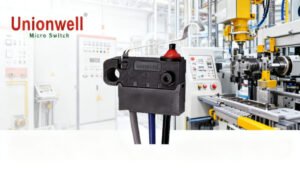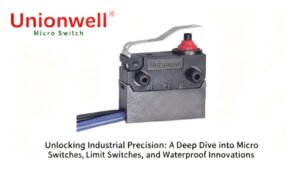
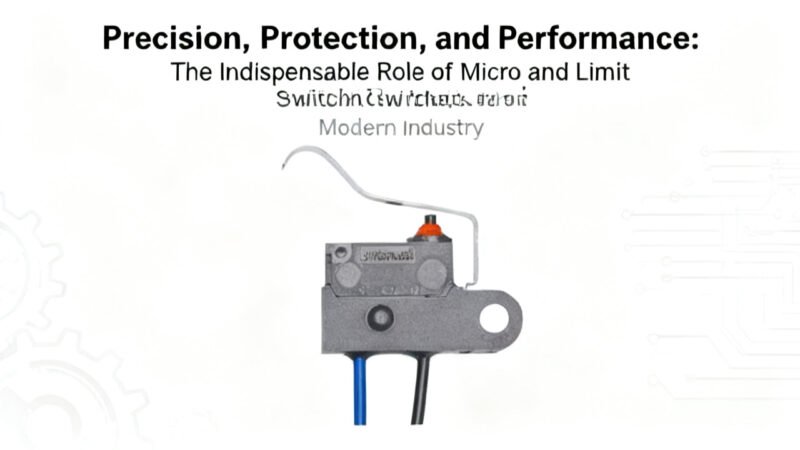
In the intricate machinery of modern industry, certain components operate silently, yet their precision and reliability are absolutely critical to the safety, efficiency, and overall performance of countless systems. Among these unsung heroes are micro switches, limit switches, and their specialized counterpart, the waterproof micro switch. These compact devices are far more than simple on/off mechanisms; they are the feedback loops, the safety interlocks, and the positional sensors that empower automation across diverse sectors, from manufacturing and robotics to automotive and consumer electronics.
Understanding the Fundamentals: The Micro Switch
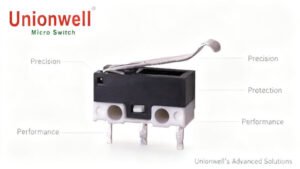
At its core, a micro switch, often referred to as a miniature snap-action switch, is designed for rapid, repeatable actuation. Its defining characteristic is the snap-action mechanism, which ensures that the contacts switch very quickly from one state to another, regardless of the speed of the actuator. This rapid transfer minimizes arcing, extending the switch’s operational life and enhancing its reliability. Key benefits include:
- High Precision: Consistent operating point and release point.
- Durability: Engineered for millions of cycles, making them ideal for high-frequency applications.
- Compact Size: Allows integration into confined spaces.
- Versatility: Available in various actuator styles (pin plunger, lever, roller lever) and electrical ratings.
Micro switches are ubiquitous, found in everything from household appliances and vending machines to complex industrial control panels and medical devices. Their ability to provide precise feedback makes them essential for sensing position, detecting presence, or triggering specific actions.
The Critical Role of the Limit Switch
Building upon the principles of the micro switch, a limit switch is specifically designed to detect the presence or absence of an object, or to monitor the positional limits of a moving part within a machine. They are robust electromechanical devices that typically feature a more rugged enclosure and a variety of actuator types (e.g., roller plunger, rotary lever, fork lever) to withstand harsh industrial environments. Limit switches are paramount for:
- Safety Interlocks: Preventing machinery from operating if guards are open or parts are not in a safe position.
- Positional Control: Ensuring components reach their correct travel limits, preventing over-travel or collisions.
- Sequence Control: Initiating the next step in an automated process once a previous step is completed.
- Machine Protection: Shutting down equipment if a fault occurs or a component moves beyond its designated range.
From conveyor systems and robotic arms to CNC machines and access gates, limit switches provide the critical feedback necessary for automated systems to operate safely, predictably, and efficiently. Their reliability in harsh conditions is often a non-negotiable requirement.
The Imperative of the Waterproof Micro Switch
While standard micro and limit switches excel in controlled environments, many industrial applications expose components to moisture, dust, oil, chemicals, and extreme temperatures. This is where the waterproof micro switch becomes indispensable. Engineered with superior sealing technologies, these switches offer robust protection against ingress, typically rated according to the Ingress Protection (IP) system (e.g., IP67, IP68).
A waterproof micro switch ensures continuous, reliable operation in challenging conditions such as:
- Outdoor Equipment: Agricultural machinery, construction vehicles, marine applications.
- Food and Beverage Processing: Where frequent washdowns are required.
- Chemical Plants: Exposure to corrosive liquids and gases.
- Automotive Applications: Engine compartments, chassis, and exterior sensing.
- Industrial Cleaning Equipment: High-pressure water and detergents.
The integrity of the sealing material, often involving epoxy potting, O-rings, and specialized housing designs, is crucial for preventing contaminants from compromising the switch’s internal contacts and mechanism. Investing in high-quality waterproof switches prevents costly downtime, repairs, and potential safety hazards caused by environmental factors.
Partnering with a Premier micro switch manufacturer
The performance and longevity of micro, limit, and waterproof switches are directly tied to the quality of their design and manufacturing. For businesses relying on these critical components, selecting a reputable micro switch manufacturer is not merely a purchasing decision, but a strategic partnership. Key attributes to look for in a leading manufacturer include:
- Commitment to Quality: Adherence to international standards (e.g., ISO, UL, CE) and rigorous testing protocols.
- Extensive Product Portfolio: A wide range of switches with various electrical ratings, actuator types, and environmental protections to meet diverse application needs.
- Customization Capabilities: The ability to design and produce switches tailored to specific customer requirements, including unique form factors, wiring harnesses, or operating characteristics.
- Technical Expertise and Support: Providing in-depth technical assistance, application guidance, and troubleshooting support to ensure optimal integration and performance.
- Reliable Supply Chain: Ensuring consistent product availability and timely delivery to prevent production delays.
- Innovation: A focus on research and development to introduce new technologies and improve existing products, addressing evolving industry demands.
A manufacturer that prioritizes precision engineering, robust materials, and stringent quality control provides not just a component, but a guarantee of reliability and performance that directly impacts the end product’s success.
Key Considerations When Selecting Your Switches
When specifying micro, limit, or waterproof micro switches for your application, several factors must be carefully evaluated:
- Electrical Rating: Current and voltage requirements of the circuit.
- Operating Force: The force required to actuate the switch, crucial for sensitive applications.
- Actuator Type: Pin plunger, roller lever, rotary lever, etc., chosen based on the sensing mechanism.
- Contact Configuration: Normally Open (NO), Normally Closed (NC), or Changeover (SPDT).
- Environmental Protection: IP rating for dust and moisture, operating temperature range.
- Material Compatibility: Housing and contact materials suitable for the operating environment.
- Life Expectancy: Mechanical and electrical life cycles required for the application.
Thorough consideration of these parameters ensures the selection of a switch that not only meets functional requirements but also provides long-term reliability and cost-effectiveness.
Conclusion
Micro switches, limit switches, and waterproof micro switches are foundational elements in the architecture of modern industrial automation. Their ability to deliver precise, reliable feedback under various conditions makes them indispensable for safety, control, and operational efficiency across virtually every industry. For businesses seeking to optimize their systems and ensure maximum uptime, the strategic choice of high-quality switches from a trusted manufacturer is paramount. By understanding their distinct roles and selecting components engineered for durability and performance, industries can continue to push the boundaries of automation, achieving greater precision, enhanced protection, and superior overall performance.