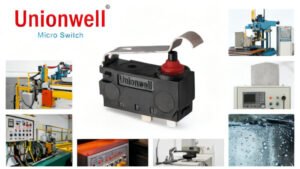
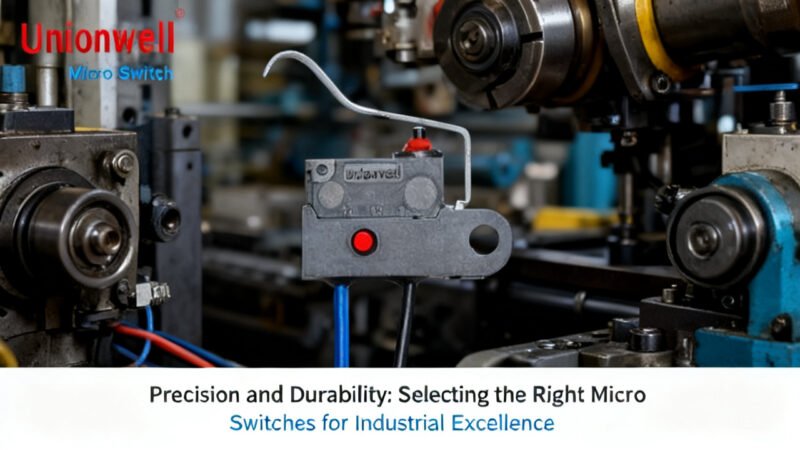
In the intricate world of industrial automation and control systems, seemingly small components often play the most critical roles. Among these, the micro switch stands out as an indispensable element, serving as the silent sentinel for countless operations. These compact, snap-action devices are fundamental to ensuring precision, safety, and efficiency across a vast spectrum of applications, from heavy machinery to delicate medical equipment. Understanding their diverse types, robust construction, and precise application is paramount for engineers and procurement professionals striving for industrial excellence.
At its core, a micro switch is a small switch that requires minimal force to operate a snap-action mechanism, which rapidly changes the state of its electrical contacts. This rapid switching action is crucial for preventing arcing and ensuring consistent performance over millions of cycles. A superior micro switch is defined by several key characteristics:
- Precision Actuation: The ability to operate reliably with minimal displacement and consistent operating force.
- Exceptional Durability: Constructed with high-quality materials to withstand mechanical stress, vibration, and environmental factors, ensuring a long mechanical and electrical life.
- High Electrical Ratings: Capable of handling various current and voltage loads without premature failure.
- Reliable Contact Materials: Often silver alloys, chosen for their excellent conductivity and resistance to wear and corrosion.
- Consistent Performance: Delivering repeatable switching points and contact resistance throughout its operational lifespan.
The integrity of these characteristics largely depends on the expertise and quality control of the micro switch manufacturer. A reputable manufacturer invests heavily in research, development, and stringent testing protocols to deliver components that meet the demanding standards of industrial applications.
Specialized Applications: The Indispensable Limit Switch
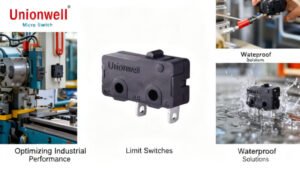
A specific and highly prevalent type of micro switch is the limit switch. These devices are designed to detect the presence or absence of an object, or to monitor the position of a moving part within a machine or system. They are foundational to safety interlocks, automated sequences, and machine control, acting as critical feedback mechanisms.
Limit switches typically feature robust housings and various actuator types (e.g., plunger, roller lever, rotary) to suit different mechanical interfaces. Their primary functions include:
- Position Sensing: Confirming that a component has reached its intended position.
- End-of-Travel Detection: Preventing machinery from exceeding its operational limits.
- Safety Interlocks: Ensuring that protective guards are closed or that dangerous operations cease when personnel are in proximity.
- Sequence Control: Triggering the next step in an automated process.
The reliability of a limit switch directly impacts the safety and efficiency of the entire system it controls. In harsh industrial environments, where dust, debris, temperature fluctuations, and mechanical impact are common, the construction and sealing of these switches are paramount.
Conquering Harsh Environments: The Imperative of Waterproof Micro Switches
While standard micro switches excel in controlled environments, many industrial applications expose components to conditions that demand superior protection. This is where the waterproof micro switch becomes indispensable. Designed to resist ingress from liquids, dust, and other contaminants, these switches maintain operational integrity in challenging settings where conventional switches would quickly fail.
Key features of waterproof micro switches include:
- IP Ratings (Ingress Protection): These international standards define the sealing effectiveness. An IP67 rating, for instance, signifies complete protection against dust ingress and protection against immersion in water up to 1 meter for 30 minutes. Higher ratings like IP68 offer even greater immersion protection.
- Sealing Mechanisms: Employing specialized O-rings, epoxy potting, rubber gaskets, and ultrasonic welding to create a hermetic seal around the switch mechanism and terminals.
- Corrosion-Resistant Materials: Utilizing plastics and metals that can withstand exposure to chemicals, saltwater, and other corrosive agents.
Applications for waterproof micro switches are diverse and critical, spanning industries such as:
- Automotive: Door latches, gear shift mechanisms, engine compartment controls.
- Marine: Navigation equipment, bilge pumps, deck controls.
- Food & Beverage: Processing machinery requiring frequent washdowns.
- Outdoor Equipment: Agricultural machinery, construction vehicles, vending machines.
- Medical Devices: Equipment requiring sterilization or operating in humid environments.
The choice of a waterproof micro switch is not merely an upgrade; it is often a necessity to ensure continuous operation, prevent costly downtime, and comply with safety regulations in demanding conditions.
Key Considerations for Micro Switch Selection
Selecting the optimal micro switch for a given application involves a comprehensive evaluation of several critical parameters:
- Operating Force and Travel: The amount of force required to actuate the switch and the distance the actuator must travel. This directly impacts user experience or mechanical integration.
- Electrical Rating: Ensure the switch can safely handle the maximum voltage and current of the circuit, considering both resistive and inductive loads.
- Contact Configuration: Common types include SPDT (Single Pole Double Throw), SPST-NO (Single Pole Single Throw – Normally Open), and SPST-NC (Single Pole Single Throw – Normally Closed).
- Terminal Type: Options like solder terminals, quick-connect terminals, screw terminals, or wire leads offer flexibility for different wiring methods.
- Actuator Type: Pin plungers, roller levers, simulated rollers, and rotary levers are chosen based on the mechanical interface and desired actuation method.
- Environmental Specifications: Temperature range, resistance to shock and vibration, and IP rating are crucial for harsh environments.
- Mechanical and Electrical Life: Specifies the expected number of operations before failure, a key indicator of long-term reliability.
- Agency Approvals: Certifications such as UL, cUL, ENEC, and RoHS compliance ensure adherence to international safety and environmental standards.
Partnering with a knowledgeable micro switch manufacturer who can provide detailed technical specifications, application support, and customizable solutions is invaluable. Such a partnership ensures that the selected components are not only compliant but also optimized for peak performance and longevity within your specific system.
Conclusion
Micro switches, in their various forms including robust limit switches and resilient waterproof variants, are the unsung heroes of modern industrial and commercial operations. Their compact size belies their profound impact on system reliability, safety, and operational efficiency. By carefully considering the application’s unique demands and partnering with a reputable micro switch manufacturer, businesses can ensure they are integrating components that deliver unwavering performance and contribute significantly to overall system integrity. Investing in high-quality, precisely engineered micro switches is an investment in the uninterrupted functionality and long-term success of any sophisticated system.