In the intricate world of industrial automation and control, the reliability of every component is paramount. Among these critical elements, switches play an indispensable role, acting as the silent sentinels that dictate the flow of operations, ensure safety, and maintain precision. From the smallest micro switch to robust limit switches designed for extreme conditions, and specialized waterproof micro switches built to defy the elements, understanding their nuances is key to engineering success. For procurement professionals, design engineers, and maintenance managers, selecting the right switch from a trusted micro switch manufacturer is not just a decision, but an investment in operational longevity and efficiency.
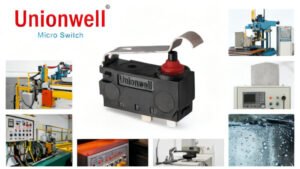
At the heart of countless devices, the micro switch stands as a testament to compact engineering and high reliability. Characterized by its “snap-action” mechanism, a micro switch provides rapid, repeatable switching with a distinct tactile and audible feedback. This sudden change in contact state, independent of the actuator’s speed, minimizes arcing and extends the electrical life of the switch. Their small size, high precision, and durability make them ubiquitous across a vast array of applications.
Key Characteristics & Applications:
- High Repeatability: Ensures consistent performance over millions of cycles, critical for precision machinery.
- Compact Design: Allows integration into confined spaces, enabling miniaturization of end products.
- Versatile Actuators: Available with various levers, plungers, and rollers to suit diverse operational needs.
- Diverse Applications: Found in everything from consumer electronics (e.g., microwave ovens, washing machines) to automotive systems (e.g., door locks, seatbelt sensors), industrial control panels, medical equipment, and security systems.
Choosing a reputable micro switch manufacturer is crucial to guarantee these characteristics, ensuring that the switches meet stringent quality and performance standards.
Beyond Basic Detection: The Robust Limit Switch
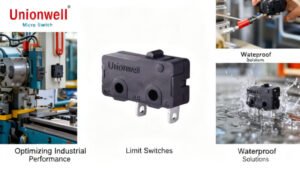
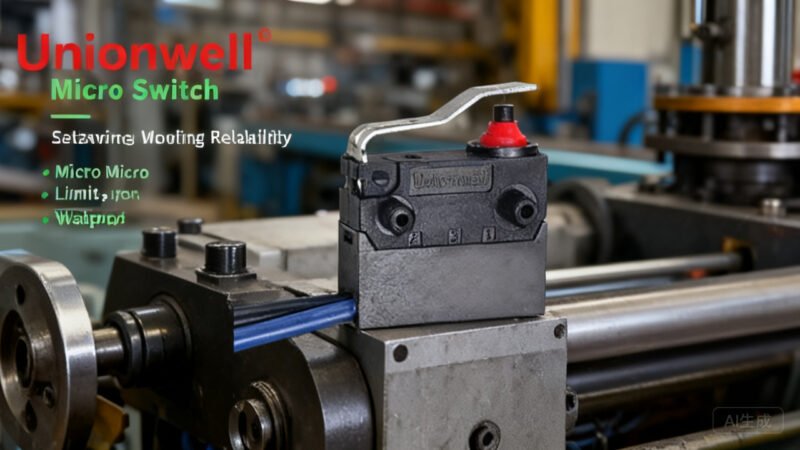
When it comes to detecting the presence, position, or end-of-travel of an object in more demanding industrial environments, the limit switch takes center stage. A limit switch is essentially a micro switch housed within a rugged enclosure, designed to withstand mechanical stress, vibration, and environmental exposure. They are the workhorses of factory automation, providing critical feedback for machinery operation and safety interlocks.
Types & Industrial Applications:
- Plunger Type: Activated by direct contact with an object, ideal for precise point detection.
- Roller Lever Type: Features a roller that allows for smoother activation by cams or sliding objects.
- Rotary Type: Used for detecting rotational movement or angle, often with adjustable levers.
- Heavy-Duty Enclosures: Built to protect the internal switch mechanism from dust, debris, coolant, and impacts, ensuring reliable operation in harsh industrial settings.
Common applications include machine tools (CNC machines, presses), conveyor systems, elevators, overhead cranes, robotics, and safety gates, where their robust construction and reliable operation are non-negotiable. A high-quality limit switch is integral to preventing machinery damage and ensuring operator safety.
Conquering the Elements: Waterproof Micro Switch Technology
In environments where moisture, dust, oils, or corrosive liquids are present, standard switches simply won’t suffice. This is where the waterproof micro switch becomes indispensable. Engineered with specialized sealing techniques, such as epoxy potting, O-rings, and sealed terminals, these switches provide superior protection against ingress, ensuring uninterrupted operation and extended lifespan in challenging conditions.
The Importance of IP Ratings:
The Ingress Protection (IP) rating system (e.g., IP67, IP68) is a crucial standard for waterproof micro switches. The first digit indicates protection against solids (dust), and the second digit indicates protection against liquids (water). An IP67 rated switch, for instance, is fully protected against dust and can withstand immersion in water up to 1 meter for 30 minutes, making it ideal for many outdoor and wash-down applications.
Critical Applications:
- Outdoor Equipment: Agricultural machinery, construction vehicles, traffic control systems.
- Marine Applications: Boats, docks, underwater equipment.
- Food & Beverage Processing: Equipment requiring frequent wash-downs and exposure to cleaning agents.
- Medical Devices: Sterilizable equipment, portable diagnostics.
- Industrial Wash-Down Areas: Manufacturing plants with liquid exposure.
For these demanding environments, sourcing a high-performance waterproof micro switch from a specialized manufacturer is critical to prevent failures, reduce downtime, and ensure compliance with safety and hygiene standards.
Key Considerations When Selecting Your Switch
Choosing the optimal switch for your application requires a thorough evaluation of several factors:
- Electrical Ratings: Ensure the switch can safely handle the required voltage and current for both AC and DC loads.
- Operating Force & Travel: Match the switch’s actuation force and pre-travel/over-travel to the mechanical design of your system.
- Mechanical & Electrical Life: Consider the expected number of cycles the switch needs to endure. High-quality switches offer millions of cycles.
- Environmental Conditions: Evaluate temperature range, humidity, vibration, shock, and the necessary IP rating for ingress protection.
- Actuator Type: Select the appropriate lever, roller, plunger, or other actuator for reliable interaction with the target object.
- Terminal Configuration: Options like solder, quick-connect, screw, or wire leads need to integrate seamlessly with your wiring.
- Material Compatibility: Ensure housing and contact materials are suitable for chemical exposure or specific environmental stressors.
- Certifications: Look for industry-specific certifications (e.g., UL, CE, RoHS) to ensure compliance and safety.
Partnering with an experienced micro switch manufacturer, such as unionwell, provides access to a wide range of standard and custom solutions, backed by technical expertise and rigorous quality control. Their comprehensive product lines often include robust limit switches and advanced waterproof micro switch options tailored for diverse industrial needs.
The Future of Industrial Switching
The evolution of industrial switching continues, driven by demands for greater efficiency, intelligence, and durability. Trends include:
- Miniaturization: Ever smaller switches for more compact designs.
- Smart Integration: Switches with integrated sensors or communication capabilities for IoT and Industry 4.0 applications.
- Enhanced Durability: Development of new materials and sealing technologies for even harsher environments.
- Customization: Growing demand for tailored switch solutions to meet unique application challenges.
Conclusion
Micro switches, limit switches, and waterproof micro switches are far more than simple on/off devices; they are precision-engineered components vital to the safety, efficiency, and longevity of industrial systems. For B2B stakeholders, making informed choices about these switches is paramount. By carefully considering application requirements, environmental factors, and partnering with a reputable micro switch manufacturer, companies can ensure they deploy robust, reliable, and high-performing solutions that stand the test of time and elevate overall industrial reliability.