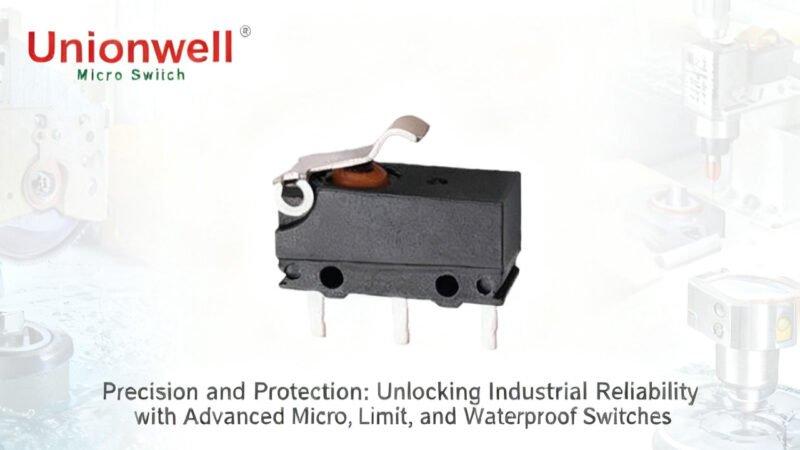
In the intricate world of industrial automation and control, the seemingly small components often hold the greatest sway over system reliability and performance. Among these critical elements are micro switches, limit switches, and their specialized counterparts, waterproof micro switches. These devices serve as the silent sentinels, detecting presence, position, and triggering actions that ensure the smooth, safe, and efficient operation of countless machines and systems across diverse sectors. For any B2B entity involved in manufacturing, engineering, or system integration, understanding the nuances and selecting the right switch from a reputable micro switch manufacturer is paramount to achieving operational excellence and safeguarding investments.
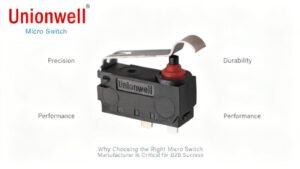
Micro switches, also known as snap-action switches, are compact electrical switches that employ a spring-loaded mechanism to achieve rapid, decisive contact opening and closing. Their defining characteristic is the “snap” action, which ensures that the contact transfer occurs quickly and independently of the actuation speed. This rapid switching minimizes arcing, extending the electrical life of the switch and enhancing its reliability in high-cycle applications.
- Precision: Designed for highly accurate positional detection.
- Durability: Engineered for millions of operational cycles, even in demanding environments.
- Compact Size: Allows for integration into space-constrained designs.
- Versatility: Available with various actuator types (lever, pin plunger, roller) to suit specific application needs.
From automotive systems detecting seatbelt engagement to home appliances ensuring safety, micro switches are ubiquitous. In industrial settings, they are vital for safety interlocks on machinery guards, precise position sensing in robotics, and control functions within complex equipment, providing reliable feedback to control systems.
Ensuring Safety and Control: The Indispensable Role of Limit Switches
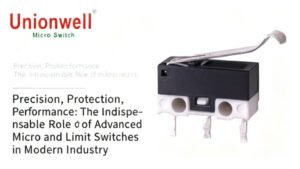
Limit switches are robust electromechanical devices designed to detect the presence or absence of an object, or to monitor the end-of-travel for moving parts within a machine. Unlike micro switches, which can be internal components, limit switches are typically designed for external mounting and are built to withstand more severe physical and environmental stresses.
They operate on a simple principle: physical contact with an object causes an actuator to move, which in turn operates the internal switch contacts. This makes them ideal for:
- Position Sensing: Determining the exact position of a component on a conveyor belt or a robotic arm.
- Safety Interlocks: Preventing machinery from operating if a guard is open or a component is out of place.
- Sequence Control: Initiating the next step in an automated process once a preceding step is completed.
- Counting: Registering the passage of items on an assembly line.
The strength of a limit switch lies in its rugged construction, often featuring metal housings and robust sealing to protect against dust, oil, and impacts. They are indispensable in heavy industries such as material handling, manufacturing, construction equipment, and power generation, where reliability under challenging conditions is non-negotiable.
Conquering Harsh Environments: The Imperative of Waterproof Micro Switches
Many industrial and commercial applications operate in environments hostile to standard electrical components. Exposure to water, dust, oil, corrosive chemicals, or extreme temperatures can quickly degrade conventional switches, leading to premature failure, costly downtime, and potential safety hazards. This is where waterproof micro switches become not just an advantage, but a necessity.
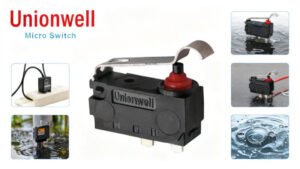
A waterproof micro switch is specifically engineered with enhanced sealing mechanisms and durable materials to achieve high Ingress Protection (IP) ratings (e.g., IP67, IP68). These ratings indicate the switch’s ability to resist the penetration of solids (like dust) and liquids (like water immersion).
Key Benefits of Waterproof Micro Switches:
- Extended Lifespan: Protection against environmental contaminants significantly prolongs the switch’s operational life.
- Enhanced Reliability: Ensures consistent performance even in challenging conditions, reducing unexpected failures.
- Increased Safety: Prevents short circuits and electrical hazards caused by moisture ingress.
- Reduced Maintenance: Less frequent need for replacement and repair, leading to lower operational costs.
- Broader Application Scope: Enables automation and control in previously prohibitive environments.
Applications demanding waterproof micro switches are widespread, including outdoor lighting systems, marine equipment, automotive under-hood applications, food processing machinery (requiring wash-down capabilities), medical devices that need sterilization, and heavy industrial equipment exposed to weather or process fluids. For a micro switch manufacturer, the development and rigorous testing of these specialized switches represent a significant commitment to advanced engineering and customer reliability.
Critical Selection Criteria for Industrial Switches
Choosing the correct switch involves more than just identifying the type. A thorough evaluation of several key factors is crucial:
- Environmental Conditions: Assess temperature range, presence of dust, moisture, oils, or corrosive agents. This dictates the required IP rating and material composition.
- Electrical Specifications: Match the switch’s voltage and current ratings to the circuit requirements. Consider the type of load (resistive, inductive, lamp) as it affects contact wear.
- Mechanical Characteristics: Evaluate actuator type (pin plunger, roller lever, hinge lever, panel mount plunger) based on the mechanism it will interact with. Consider operating force, pre-travel, over-travel, and differential travel for precise actuation.
- Durability and Lifespan: Look at the specified mechanical and electrical life cycles. High-frequency applications demand switches designed for millions of operations.
- Certifications: Ensure compliance with relevant industry standards such as UL, CE, RoHS, and others specific to your region or application (e.g., ATEX for hazardous locations).
- Mounting and Size: Verify the physical dimensions and mounting options are compatible with your design constraints.
The Manufacturer’s Edge: Why Partner with a Specialized Switch Provider
When the reliability of your industrial systems hinges on the performance of these critical components, partnering with an experienced micro switch manufacturer is non-negotiable. A dedicated manufacturer brings:
- Expertise in Design and Engineering: In-depth knowledge to develop switches that meet stringent performance and durability requirements.
- Rigorous Quality Control: Comprehensive testing at every stage, from raw materials to finished products, ensuring consistent quality.
- Customization Capabilities: The ability to tailor switches to unique application specifications, including custom actuators, wire harnesses, or specific electrical ratings.
- Innovation and R&D: Continuous investment in research and development to introduce new technologies and improve existing products.
- Reliable Supply Chain and Technical Support: Assurance of product availability and expert assistance for selection, integration, and troubleshooting.
In conclusion, micro switches, limit switches, and particularly waterproof micro switches are fundamental to the integrity and efficiency of modern industrial and commercial operations. Their correct selection and deployment are critical for safeguarding machinery, ensuring personnel safety, and maintaining uninterrupted productivity. By choosing a reputable and specialized manufacturer, businesses can secure high-performance, durable, and reliable switching solutions that form the bedrock of robust control systems, ultimately driving success in an increasingly automated world.