In the intricate tapestry of industrial automation and control systems, few components are as ubiquitous yet as critical as the micro switch. These small, electromechanical devices are the unsung heroes responsible for detecting position, ensuring safety, and initiating sequences across a vast array of applications. From complex machinery in manufacturing plants to consumer appliances, their precise snap-action mechanism provides reliable feedback, making them indispensable for operational efficiency and safety. For engineers, product designers, and procurement professionals, understanding the nuances of micro switches—including standard, limit, and specialized waterproof variants—is key to designing robust, long-lasting, and high-performing systems.
Understanding the Core: How Micro Switches Operate
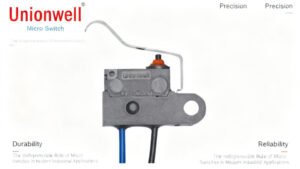
At its heart, a micro switch is characterized by its snap-action mechanism. This unique design ensures that the contacts switch rapidly from one state to another, regardless of the speed at which the actuator is pressed. This rapid transfer minimizes arcing, which significantly extends the switch’s electrical life and improves its reliability. Typically, a micro switch consists of an actuator (plunger, lever, roller), a spring mechanism, and a set of electrical contacts (common, normally open, normally closed). When the actuator reaches a specific point, the spring quickly reverses its force, causing the contacts to snap into their alternate position. This repeatable and precise action is what makes micro switches ideal for applications requiring accurate position sensing and consistent operational feedback.
Specialized Solutions: Limit Switches and Their Indispensable Role
While all micro switches perform a fundamental switching function, limit switches represent a specialized category often designed for more demanding industrial environments. A limit switch is essentially a micro switch housed within a rugged enclosure, specifically engineered to withstand mechanical stress, dust, water, and other harsh conditions. Their primary function is to detect the presence or absence of an object, or to monitor the limits of travel for mechanical parts in machinery. They are critical for:
- Position Sensing: Determining if a gate is open or closed, a part is in place, or a machine arm has reached its endpoint.
- Safety Interlocks: Preventing machinery from operating if a safety guard is open or if a component is not correctly positioned.
- Automation Control: Triggering the next step in an automated sequence based on a physical condition.
The robust construction and precise operation of limit switches make them vital components in manufacturing lines, robotics, conveyor systems, and heavy industrial equipment, where reliability under extreme conditions is paramount.
Conquering the Elements: The Imperative of Waterproof Micro Switches
Many industrial and outdoor applications expose electrical components to moisture, dust, and corrosive agents, which can severely compromise their performance and lifespan. This is where waterproof micro switches become indispensable. Engineered with advanced sealing techniques and durable materials, these switches are designed to maintain their integrity and functionality even when submerged or subjected to high-pressure washdowns. Key considerations for waterproof micro switches include:
- IP Ratings: Ingress Protection (IP) ratings are crucial. An IP67 rated switch, for instance, is dust-tight and protected against temporary immersion in water. Higher ratings like IP68 offer protection against continuous immersion.
- Sealing Mechanisms: This can involve O-rings, epoxy potting, fully sealed housings, or specialized gaskets around the actuator and terminals to prevent the ingress of liquids and particulates.
- Material Selection: Corrosion-resistant metals for contacts and terminals, and robust, UV-resistant plastics for housings, are often used to ensure longevity in challenging environments.
Waterproof micro switches are essential for applications in marine equipment, outdoor machinery, food processing plants, medical devices that require sterilization, and any environment where exposure to liquids or contaminants is a concern, ensuring uninterrupted operation and enhanced safety.
Diverse Applications Across Industrial Verticals
The versatility of micro switches, including their limit and waterproof variants, makes them critical components across a wide spectrum of industries:
- Manufacturing and Automation: Conveyor systems, robotics, CNC machines, safety interlocks on access panels.
- Automotive Industry: Door latches, seat belt sensors, gear position detection, power window controls.
- Medical Devices: Hospital beds, diagnostic equipment, fluid dispensing systems, patient monitoring devices.
- HVAC Systems: Damper control, fan speed detection, pressure switches.
- Consumer Electronics: Appliance door interlocks (microwaves, washing machines), power tools, vending machines.
- Heavy Equipment: Construction machinery, agricultural vehicles, forklifts, where environmental protection is key.
Their ability to provide reliable, repeatable switching actions across such diverse applications underscores their foundational role in modern technology.
Critical Selection Criteria for B2B Procurement
Choosing the right micro switch involves a careful evaluation of several technical specifications to ensure optimal performance, durability, and cost-effectiveness for industrial applications:
- Electrical Ratings: Matching the switch’s voltage and current ratings to the application’s requirements is paramount to prevent premature failure.
- Operating Force: The force required to actuate the switch is critical for sensitive applications or those involving specific mechanical linkages.
- Actuator Type: Plungers, levers (straight, roller, simulated roller), and specialized actuators offer different operational characteristics suitable for various mechanical interfaces.
- Terminal Type: Options include solder terminals, quick-connect terminals, screw terminals, and wire leads, chosen based on ease of installation and connection reliability.
- Environmental Protection: For harsh conditions, IP ratings (e.g., IP67, IP68) are non-negotiable for waterproof and dust-tight requirements.
- Mechanical and Electrical Life: High cycle ratings (millions of operations) indicate greater durability and longevity, reducing maintenance costs.
- Operating Temperature Range: Ensuring the switch can perform reliably within the application’s temperature extremes.
- Certifications: Compliance with international standards like UL, CE, CQC, and RoHS is often required for market entry and safety assurance.
- Material Composition: The quality of internal contacts (e.g., silver alloy for conductivity and arc resistance) and housing materials (e.g., high-grade thermoplastics, metal) directly impacts performance and durability.
The Long-Term Value of Quality Switching Components
Investing in high-quality micro switches from a reputable manufacturer offers significant long-term benefits beyond initial cost savings. Superior switches translate into enhanced system reliability, reduced downtime for maintenance and repairs, and improved operational efficiency. Their precision ensures consistent product quality in manufacturing processes, while their durability withstands the rigors of industrial environments, contributing to a lower total cost of ownership (TCO) and a safer working environment. Choosing a manufacturer known for rigorous testing, consistent quality control, and innovative design can make a profound difference in the overall performance and longevity of any industrial system.
Partnering with a Reputable micro switch manufacturer
The selection of a micro switch manufacturer is as important as the switch specifications themselves. A reliable partner offers not only a broad range of high-quality products but also technical support, customization options, and consistent supply chain management. This partnership ensures that engineers and procurement teams can confidently source components that meet their exact design and operational requirements, fostering innovation and reliability.
Conclusion
Micro switches, in their various forms—standard, limit, and waterproof—are foundational elements in modern industrial and electronic systems. Their small size belies their immense importance in ensuring precision, safety, and efficiency. By carefully considering the specific application requirements and partnering with an expert micro switch manufacturer, industries can harness the full potential of these critical components, driving innovation and achieving operational excellence.