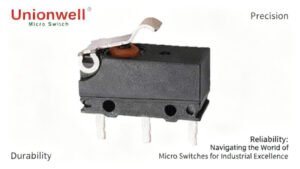
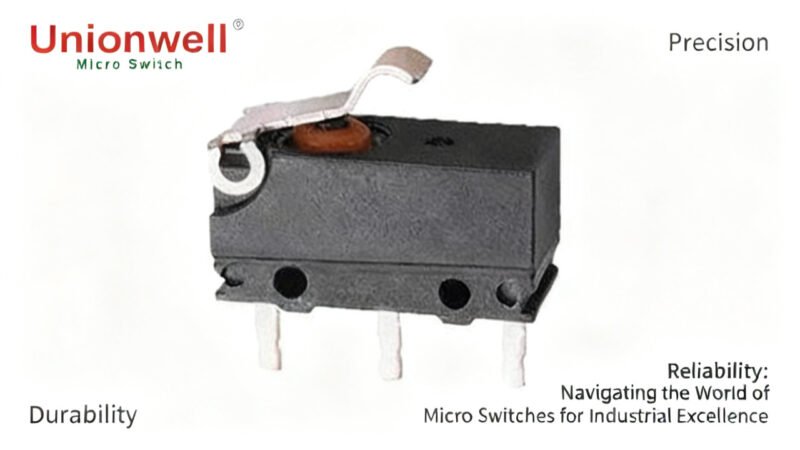
In the intricate landscape of modern industrial design and automation, the humble micro switch often plays a disproportionately critical role. These compact, snap-action devices are the unsung heroes behind countless operations, converting subtle mechanical movements into precise electrical signals. For engineers, product designers, and procurement professionals, understanding the nuances of micro switches—and partnering with a reputable micro switch manufacturer—is paramount to ensuring the reliability, safety, and longevity of their applications.
At its core, a micro switch is characterized by its snap-action mechanism, which ensures rapid, repeatable switching regardless of the speed of actuation. This inherent design minimizes arcing, extends contact life, and provides a clear, tactile feedback. Key attributes include high accuracy, long mechanical and electrical life, and the ability to operate effectively in confined spaces. However, not all micro switches are created equal, and their performance can vary significantly based on design, materials, and manufacturing precision.
The Critical Role of Limit Switches
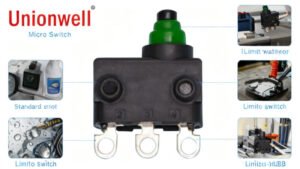
A specialized category within micro switches, the limit switch, is indispensable in industrial automation. Designed to detect the presence or absence of an object, monitor position, or sense the end of travel for moving parts, limit switches are fundamental for safety interlocks, sequencing, and controlling machinery. Their robust construction often includes durable housings and various actuator types (e.g., roller levers, plungers, rotary) to withstand demanding industrial environments. When precision positioning and repeatable detection are non-negotiable, a high-quality limit switch is the go-to component.
Conquering Harsh Environments with Waterproof Micro Switches
Many industrial and outdoor applications expose electronic components to challenging conditions, including moisture, dust, and corrosive substances. This is where the waterproof micro switch becomes indispensable. Engineered with advanced sealing technologies—often meeting IP67 or even IP68 ratings—these switches are designed to prevent ingress of water and particulates, ensuring consistent performance and preventing premature failure. From marine equipment and automotive systems to outdoor security devices and food processing machinery, waterproof micro switches guarantee operational integrity where standard switches would fail. The sealing can involve epoxy potting, O-rings, and specialized housing designs, all contributing to their resilience in wash-down areas, humid environments, or direct exposure to weather.
Why Partner with a Specialized micro switch manufacturer?
The choice of manufacturer significantly impacts the quality and suitability of micro switches for your application. A leading micro switch manufacturer brings several advantages:
- Unwavering Quality & Consistency: Adherence to stringent quality control standards ensures every switch performs reliably, minimizing field failures and warranty claims.
- Technical Expertise & Customization: Experienced manufacturers possess deep application knowledge, offering guidance on selection and the ability to customize switches (e.g., operating force, actuator type, terminal configurations) to meet unique project specifications.
- Robust Research & Development: Continuous innovation in materials, sealing techniques, and switch mechanisms leads to components that meet evolving industry demands and environmental regulations.
- Global Certifications & Compliance: Products from reputable manufacturers typically carry essential certifications such as UL, CE, RoHS, and REACH, facilitating global market access and ensuring regulatory compliance.
- Reliable Supply Chain: Consistent production capabilities and efficient logistics ensure on-time delivery, critical for managing project timelines and avoiding costly production delays.
Key Considerations for Micro Switch Selection
When specifying a micro switch, several factors must be carefully evaluated:
- Electrical Ratings: Ensure the switch can safely handle the required voltage and current for both AC and DC loads.
- Operating Force & Travel: Match these to the application’s mechanical input requirements.
- Actuator Type: Choose from various options like pin plunger, lever, roller lever, or simulated roller lever, based on the mechanism it needs to interact with.
- Terminal Configuration: Options include solder terminals, quick-connect terminals, or wire leads, impacting ease of installation.
- Environmental Conditions: Consider operating temperature range, humidity, and the need for IP ratings (e.g., IP67 for waterproof micro switch applications).
- Mechanical & Electrical Life: Evaluate the expected number of cycles the switch must endure over its lifespan.
- Mounting Style: Panel mount, PCB mount, or chassis mount options are available.
The Strategic Advantage
In a world increasingly reliant on automated processes and precise control, the performance of seemingly small components like micro switches can have monumental implications. By carefully selecting the right type—be it a standard micro switch, a robust limit switch, or a resilient waterproof micro switch—and by aligning with a dedicated micro switch manufacturer, businesses can ensure the longevity, efficiency, and safety of their products and systems. This strategic approach not only mitigates risks but also lays the foundation for innovation and sustained operational excellence.