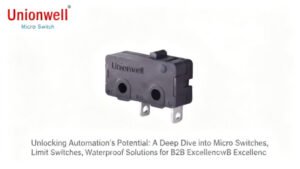
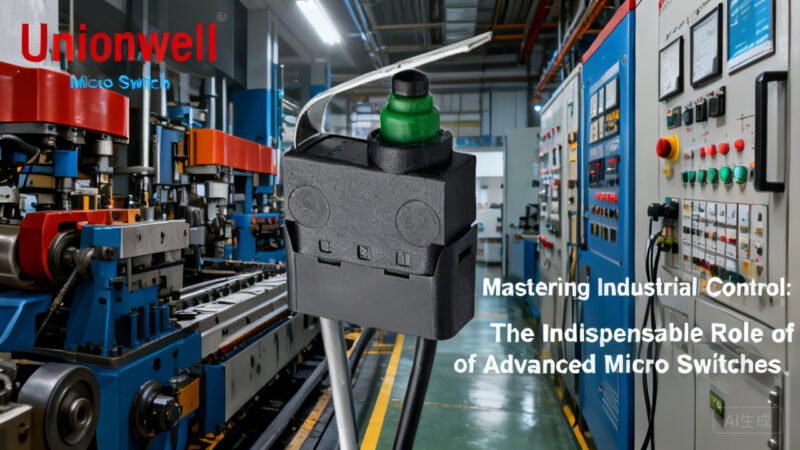
In the intricate world of industrial automation, precision, reliability, and safety are paramount. At the heart of countless mechanical and electronic systems lies a seemingly small yet profoundly critical component: the micro switch. These versatile devices are the silent workhorses, ensuring that machinery operates efficiently, safely, and exactly as intended. From manufacturing lines to sophisticated aerospace systems, understanding the nuances of micro switch technology is essential for engineers, product designers, and procurement specialists seeking to optimize performance and durability in their applications.
Micro switches, characterized by their snap-action mechanism, are designed to rapidly make or break an electrical circuit with a small amount of physical force. This rapid action minimizes arcing and extends the switch’s operational life, making them ideal for applications requiring high reliability and repeatable performance. Their compact size belies their robust capabilities, allowing them to be integrated into tight spaces where other switching solutions might be impractical.
The basic principle involves a spring-loaded lever or plunger that, upon actuation, quickly moves an internal contact from one position to another. This “snap” action ensures a definitive state change, preventing chatter and providing clear feedback. The precision and consistency of this mechanism are what make micro switches indispensable across a vast spectrum of industries, including automotive, medical equipment, home appliances, and industrial machinery.
Specialized Solutions: Limit Switches and Their Impact
A critical variant within the micro switch family is the limit switch. These devices are specifically engineered to detect the presence or absence of an object, or to monitor the position of moving parts in a machine. By physically contacting the moving part, a limit switch sends an electrical signal to a control system, initiating or halting an operation. Their robust construction and ability to withstand harsh industrial environments make them fundamental components in safety interlocks, conveyor systems, robotic arms, and automated gates.
Limit switches play a vital role in ensuring operational safety and efficiency. For example, in a manufacturing plant, a limit switch might detect when a component has reached its designated position on an assembly line, triggering the next stage of production. In safety applications, they can prevent machinery from operating if a protective guard is open, thereby safeguarding personnel. The reliability and precision of a well-engineered limit switch are non-negotiable for maintaining continuous operation and adherence to safety standards.
Conquering Harsh Environments: The Power of Waterproof Micro Switches
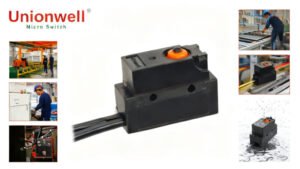
Many industrial applications operate in challenging conditions where exposure to liquids, dust, or extreme temperatures is unavoidable. For these environments, standard switches are simply inadequate. This is where waterproof micro switches become indispensable. Engineered with advanced sealing technologies, these switches are designed to resist ingress from water, oil, coolants, and other contaminants, ensuring reliable operation even when submerged or subjected to high-pressure washdowns.
The effectiveness of a waterproof micro switch is typically quantified by its Ingress Protection (IP) rating. An IP67 rating, for instance, signifies that the switch is dust-tight and can withstand immersion in water up to 1 meter for 30 minutes. Higher ratings like IP68 offer even greater protection against continuous immersion. These specialized switches are critical for applications in marine equipment, outdoor machinery, food processing plants, medical devices requiring sterilization, and automotive systems exposed to the elements. Choosing a high-quality waterproof micro switch ensures longevity, reduces maintenance, and prevents costly downtime in hostile operating conditions.
The Mark of a Superior micro switch manufacturer
The performance and longevity of any micro switch heavily depend on the expertise and quality standards of its manufacturer. A reputable micro switch manufacturer understands the critical demands of industrial applications and employs stringent quality control measures throughout the design and production process. This includes meticulous material selection, precision manufacturing techniques, and rigorous testing protocols to ensure consistent performance, durability, and compliance with international standards such as UL, cUL, ENEC, CQC, and CE.
Beyond standard offerings, leading manufacturers often provide extensive customization options, allowing engineers to tailor switches to specific electrical, mechanical, and environmental requirements. This partnership approach, coupled with robust technical support and a commitment to innovation, ensures that customers receive not just a component, but a reliable solution that seamlessly integrates into their systems and enhances overall product quality.
Key Considerations for Selecting the Right Micro Switch
Choosing the optimal micro switch involves evaluating several critical factors:
- Electrical Rating: Ensure the switch can safely handle the required voltage and current for both resistive and inductive loads.
- Operating Force: The force required to actuate the switch, critical for sensitive applications or those involving human interface.
- Actuator Type: Plunger, lever, roller lever, and simulated roller lever are common types, each suited for different mechanical interactions.
- Contact Material: Gold contacts are preferred for low-current applications to prevent oxidation, while silver-cadmium oxide is common for higher current loads.
- Environmental Sealing: For harsh conditions, consider IP-rated switches (e.g., IP67, IP68) for protection against dust and water.
- Operating Temperature Range: Ensure the switch can perform reliably within the application’s ambient temperature extremes.
- Mechanical and Electrical Life: The expected number of operations before failure, a key indicator of durability.
Careful consideration of these specifications, alongside consultation with an experienced micro switch manufacturer, will lead to the selection of a component that not only meets immediate functional requirements but also contributes to the long-term reliability and cost-effectiveness of the end product.
Conclusion: Powering Progress with Precision and Durability
Micro switches, in their various forms—from standard snap-action devices to specialized limit and waterproof variants—are fundamental to the functionality, safety, and efficiency of modern industrial systems. Their compact design, precise operation, and robust construction make them irreplaceable components across a multitude of applications. Partnering with a dedicated and quality-focused micro switch manufacturer is not merely a purchasing decision; it’s an investment in the reliability, performance, and longevity of your products and operations. By understanding the diverse capabilities and critical selection criteria of these essential components, industries can continue to innovate and build the next generation of intelligent and resilient systems.